
Let's Talk
+44 (0) 121 511 0400
ipu@ipu.co.uk
IPU Group
Log in
Quote
ContactsContact us
  • Home Page
  • Explore IPU
  • Tank Cleaning
  • Your Industry
    • Marine Industry
    • Oil & Gas Industry
    • Mining
    • Healthcare
    • Data Centres & IT Services
    • Power Generation
  • IPU Academy
  • Fuel Management Services
    • Case Studies
    • HMRC Red Diesel Rebate Changes
    • IPU Fuel Conditioning Programmes
    • Diesel Testing โ€“ DieselCheck Service & Kits
    • Fuel Cleaning Services โ€“ ClearTank diesel cleaning
    • Fuel Tank Cleaning
    • Fuel Polishing Systems โ€“ Diesel Defence
    • Diesel Defence Servicing
    • Cloud Based Fuel Monitoring
    • Fuel Polishing Hire
    • Diesel Defender Fuel Additive
    • Baldwin Filters
    • Parker Racor Filtration
    • Donaldson Filters
    • Supporting Fuel Conditioning Products
    • What is Diesel Contamination?
    • Fuel Conditioning Contacts
  • Environmental Services
    • OFTEC Inspection services
    • MCERTS Emissions Gas Testing
    • Total Fuel Management
  • Case Studies
  • Servicing
  • Emissions Reductions
    • Case Studies
    • IPU Emissions Solutions
    • Selective Catalytic Reduction system (SCR)
    • Diesel Particulate Filter for gensets (DPF)
    • Latest Emissions Legislation: MCPD and NRMM
    • Clean Air Zones
    • Stack Modelling
    • What is NOx?
    • What is Particulate Matter?
  • CAN Bus Solutions
    • Senquip Telemetry ORBs
    • Enovation Engine and Genset Battery Chargers
    • Enovation J1939 Input/Output Modules
    • Enovation CAN J1939 PowerView Gauges
    • Enovation Process Monitoring Instruments
  • Displays
  • Filtration
    • Parker Racor Filtration
    • Baldwin Filters
    • Donaldson Filters
  • Component Sourcing
    • Single Sourcing
    • Specialist Component Sourcing
    • Engine Manufacture
    • Oil Industry Supply Company
    • Marine Engine Service Company
  • Manufacturing Services
    • IPU Sub-Assemblies
  • Case Studies
  • About IPU
    • About Us
    • Our capabilities
    • Our Distributors
    • IPUโ€™s COVID-19 Response
    • Meet the Management Team
    • IPU Finance Options
    • Contact Us
    • Our History
    • Quality & Environmental
    • Modern Slavery Policy
    • Careers
    • News
    • Compliments & Complaints
  • Contact Us
  • Downloads
  • News
  • All Products

Home ยป Microbial growth – the diesel bug

Microbial growth – the diesel bug

What is diesel bug?

Diesel bug is a generic name for the microbial contamination that grows in diesel fuel. It has become an especially troublesome form of fuelย contamination since we started using biodiesel.

Pages 12-15 of our Fuel Conditioning Handbook give a useful insight into why microbial contamination is increasingly becoming a threat to the quality of our stored fuel, and how to distinguish between the different categories of diesel bug.ย Click here to request your free copy

Diesel fuel now contains up to 7% biodiesel; this is great for the environment but not always good for organisations having to store fuel.

Biodiesel is hygroscopic; it holds and attracts water far more than petrochemical diesel.ย  Attracting water is bad news for diesel fuel. It encourages the growth of diesel bug and leads to the formation of gums and resins which can stick to the side of fuel tanks and injectors. It can even cause layers of sediment to build up inside the tank.

This puts your critical power at risk.


Video: Understanding fuel contamination


Why are we only hearing about diesel bug now?

When we used petrochemical diesel we had few problems with the diesel bug. It thrives where it finds both water and diesel; petrochemical diesel does not attract water the way biodiesel does.


What are the different types of diesel bug?

The diesel bug is not a single type of organism. There are thousands of different types of bacteria, mould and yeast found inhabiting fuel systems. This kind of contamination is hard to predict as every system offers a unique environment.

There are broadly four categories of diesel bug:

  1. Bacteria: single cell organisms, typically 0.3 to 60ยตm in size. A colony can double in size in 20-30 minutes. One cell can multiply into 2 million in 7 hours. Bacteria will degrade quality fuel over time.
  2. Mould: a type of fungi with long multi-cellular filaments. There is little indication that mould degrades fuel but, due to the long strands, it does block filters.
  3. Yeast: another type of relatively slow-growing fungi. It is typically 3-4ยตm in size.
  4. Biofilm: a complex structure of microbes which adhere to the walls of the fuel tank and to each other. It begins to form when free floating microbes land on a surface and attach themselves to it. Given time, biofilms can grow many millimetres thick and produce a protective slime. Biofilms can excrete acid which can erode a metal fuel tank. Chunks of biofilm can slough off periodically, giving microbes the opportunity to infect other areas of the fuel system and block filters.
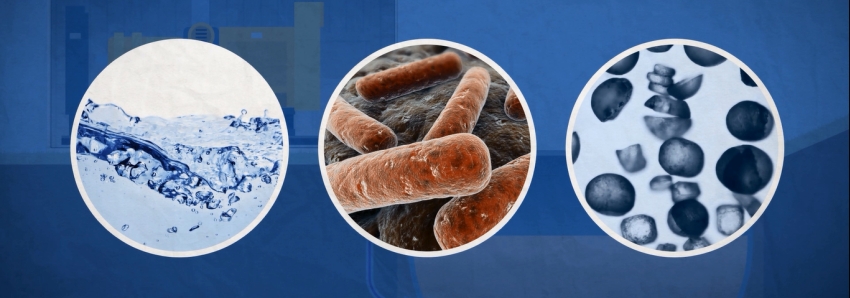
Fuel can suffer from the diesel bug

Diesel suffers from three main types of contamination: water contamination (left), microbial growth (a.k.a. the โ€˜diesel bugโ€™) (centre), solid particulate contamination (right)


Do you find algae in biodiesel?

Algae are a form of plant life that require light to grow. Although you find many types of microbial growth in biodiesel, it is very unusual to find algae inside a lightless tank.


How can you stop diesel bug growing?

Prevention is always best. The key to maintaining fuel quality is good housekeeping.ย IPU Group recommends following a comprehensive fuel conditioningย programmeย to ensure that your diesel-powered equipment runs reliably and economically. Effective programmes include four stages: testing, cleaning, polishing and stabilisation.
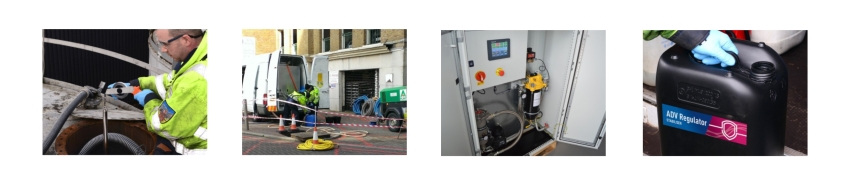
Fuel Conditioning Programme

IPU’s Fuel Conditioning Programme contains 4 stages: Testing, Cleaning, Polishing and Stabilisation.


What can be done for tanks already infected with diesel bug?

We offerย ClearTank, a comprehensive tank cleaning service that removes contamination that has grown beyond the level which polishing can clear.

ClearTank addresses water, microbial and solid particulate contamination.

Next steps

Request a Callback
Request a Quote
Request a Visit

Get your free handbook

  • The Essential Guide to Fuel Polishing

    Everything you need to understand the importance of fuel polishing, its benefit to you and how it is done by IPU.

Contacts

Downloads(no ID req'd)

  • IPU Fuel Conditioning Overview
  • IPU ClearTank
  • IPU Diesel Defence Polishing Systems Brochure
  • This field is for validation purposes and should be left unchanged.
IPU Group

Registered in England & Wales: 12167631

WASP Industrial Power Units Ltd
Navigation Way
West Bromwich
West Midlands
B70 9DF, UK

Contact us
+44 (0) 121 511 0400
+44 (0) 121 511 0401
ipu@ipu.co.uk
Links
  • Homepage
  • Product Registration
  • Product Manuals
  • Terms & Conditions of Sales
  • Privacy & Cookies

ENGINE STARTING DIVISION ACQUIRED

Industrial Power Units Ltd. of the United Kingdom (IPU Group Ltd) has concluded an acquisition to sell its Engine Starting Division to an international group of companies. This sale concluded in September 2024.

Following the sale, the Engine Starting division of IPU Ltd is now Powerstart Limited, and will be managed by David Caddick (previous Sales and Technical Director of IPU).

The full range of engine starting products, including starter motors and bespoke systems, are now available through Powerstart Limited.

IPU will continue to provide an ever-expanding range of fuel polishers & maintenance products and emissions gas testing, and remain premier distributors for several global brands.

Please select whether to be redirected to our new partner site Powerstart Limited or stay on the IPU website.

Go to Powerstart Stay on IPU